Wednesday, November 16, 2016

Research Paper Citations


Chika Oparaocha
Professor Young
ENGW 1101
November 17, 2016


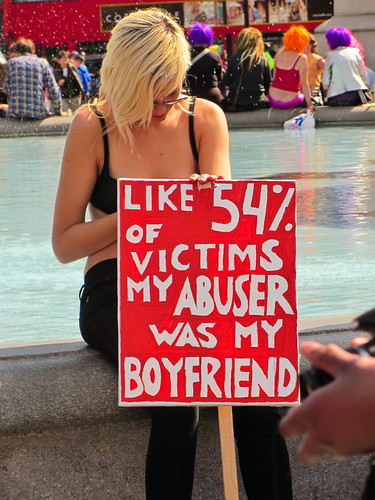
Image result for sexual violence


The following  are the citations of the articles that I have selected to support the thesis of my research paper. Below each citation I have explained how each article would assist in proving my thesis.


Bergen, Raquel Kennedy, and Paul Bukovec. "Men And Intimate Partner Rape              

     Characteristics Of Men Who Sexually Abuse Their Partner." Journal Of Interpersonal 

     Violence 21.10 (2006): 1375-1384. Academic Search Premier. Web. 15 Nov. 2016


This article explicitly shows the relationship between physical and sexual abuse within relationships(partners). The characteristics of sexually abusive partners show a trend in that the majority of these men seek control and feel entitled to sex in their relationships. My paper seeks to prove that sexual assault is caused by the entitlement of men. Society teaches men to be domineering towards women, which is displayed in the research found in the article.


Bruni, Frank. "Tackling the Roots of Rape." The New York Times. 12 Aug, 2013. Web. 

     Accessed 13 November 2016.


This article discusses how the roots of rape and rape culture stems from societies gender labels and expectations . From early ages boys are taught that their masculinity is defined by how aggressive and "sexually conquest enviable" they are, while femininity is depicted as weak and disposable.This supports my thesis by explaining how the early upbringing of children does perpetuate rape culture in society.  The solution presented in this article is to change the negative labels that are placed on women from early ages and teach men that women are their equal.


Peggy M. J. Emmerink, Ine Vanwesenbeeck, Regina J. J. M. van den Eijnden & Tom F. M. 

     ter Bogt "Psychosexual Correlates of Sexual Double Standard Endorsement in 

     Adolescent Sexuality." The Journal of Sex Research. 1 Sept. 2015. 

     DOI: 10.1080/00224499.2015.1030720  


This article explores Sexual Double Standards and its effect of adolescent sexuality. The article outlines how Western and non-Western cultures have pressured and enforced "gender normality". This normality has ultimately molded the sexual expectations from both genders from an early age--- dominant male and submissive female. The article goes on to explain the negative affects that sexual double standards(SDS) have on adolescent children, which contributes to proving my thesis--affects of  early set gender bias on girls/women.

Wednesday, November 9, 2016

Friendswood Blog Post 6: Research Paper Topic

Chika Oparaocha
Professor Young
ENGW 1101
November 9th, 2016


Friendswood Research Paper:
Male Entitlement and It's Effects on Women in Society


Working Thesis: The roots of rape culture and sexual assault stem from society's definition of gender roles. In order to reverse gender bias in society, people must be taught to respect and value women and not view them as disposable and replaceable conquests. 
Questions:


1. What part does society play in raising entitled boys?
2. How often are adolescent females raped?
3. Is rape culture more a domestic or foreign issue?
4. How are men and women treated differently in society?
5. How does the difference in upbringing of both genders affect men and women(long term)?
6. Why are some boys taught to devalue women?
7. Are there patterns in the behavior of those who rape?
8. Why is the victim blamed in rape cases?
9. Are the characteristics of those who rape and sexually assault others caused by upbringing in the home?
10. How can the entitled mentality of boys and men change?


Image result for raising a rapistImage result for raising a rapist


Saturday, October 22, 2016

Friendswood Discussion Question 1

Through your new understanding of positive accountability, discuss the way in which Dex applies it to his life. Please focus your discussion on his accountability to Willa Lambert.


           Dex applies positive accountability by being honest with Willa regarding what exactly occurred the day of the rape incident and his involvement in the incident as well. In a book by Carl Alasko,  Beyond Blame: Freeing Yourself from the Most Toxic Form of Emotional Bullshit, positive accountability is defined in two ways. One of the the ways positive accountability is defined is "to thoughtfully acknowledge an error, your own or another person's, and consider how to repair it, if necessary."(124). While out with Danni and Willa, Dex tries to repair his error when he tells Willa the full truth-- "... I was there that day at the Lawbournes'. I swear I didn't know what they were doing...I thought you were with Cully, so I didn't say anything...They put something in your drink...I heard at the end what they were doing, but I didn't believe it. I feel like shit about that."(Steinke, 305). Dex takes responsibility by telling Willa he was at the party and by explaining why he did not react to her being there. He then proceeds to attempt to repair his disloyalty when he tells Willa she was drugged at the party. Dex thoughtfully acknowledged his error of not intervening at the party or after he was informed that Willa had been drugged then, through honesty, tries to repair his mistake by allowing total transparency in their friendship.


                                  Image result for accountability


Saturday, September 24, 2016

Friendswood Blog Post 4: Blame

Blog Post 4: Pgs. 167-228
Image result for blame


 How does Hal use blame to protect Cully and himself? What is Hal trying to protect himself from?

        When Hal is notified that Cully is involved in a fight, he knows that this will most likely mean Cully will be off his high school football team. Hal knew that Cully was fully aware of what was at risk and still decided to make a poor decision. However, he does not leave Cully to be accountable for his actions, he immediately blames his inadequate church offerings, "If only he'd had more money to give as an offering to the church, if he could only show his devotion better."(228). He believes that..."he must have had a good reason.."(228). Since Hal lives through his son, he refuses to see his son for who he really is. Hal fears that his son will make all the wrong decision like he also did,; he is protecting himself from having to relive his own failures. His desperate hope in his son is a reflection of his inability to let go of his own past. He uses blame to vent the feeling of fear and blame.

                                          Image result for fear from the past

Discuss Dex’s mother’ reaction to learning that perhaps Dex attended the party. Who does she
blame? What does her response reveal about her character?

        Dex's mother has complete trust in her son. Although she has no idea that Dex attended the party, she tells other parents who insist on blaming Willa for the outcome of the party that men need to take accountability for their action, even when tempted. His mom holds Dex in high esteem and uses him as an example when she says, "My Dex knows how to control himself, no matter what present he's offered"(180). She out-rightly places blame on the males involved in the rape incident; she believes "...boys need to learn that not everything comes to them--they're not entitled"(179). Dex's mom justifiable believes that everyone needs to own up to their actions, and not passively push blame on others. In this case, Dex's mom sides with Willa because she views Willa as the victim. She refuses to sit back and allow the other parents in the meeting to deface Willa's person while simultaneously allowing the perpetrator to be portrayed as innocent. This reveals that Dex's mother is impartial and honest. She is also bold and out-spoken about matters that she is passionate about. This portion of the novel allows readers to assess the character of Dex's mother. Readers are able to conclude that she may support her sons decision to befriend Willa.


Dex begins to befriend Willa. Is his friendship genuine? Why does he befriend Willa? Does he
blame himself for what happens to her?

         Dex chooses to befriend Willa as he learns the details of what occurred at the party. After his friend, Weeks, tells him that Willa was drugged by Bishop, "Dex didn't want to be part of lying about Willa. He knew they'd tricked her somehow..."(176).  Dex wants to know the truth and decides to distance himself from the lies. He knew the rumors that were spreading throughout the school did not accurately depict what had actually occurred that day, "He started to put pieces together, things he'd overheard in the locker room , and his defense of Willa felt  even more crucial--as if it would prove something to himself."(210); Dex is not genuine in befriending Willa because he does it to make up for not being aware of her victimization at the party. Dex knows that befriending Willa will assist in uncovering the truth from the day of the party. He feels guilty by association and does blame himself for not doing more. He needs to prove to himself that he is better than the guys that drugged and raped Willa; He wants to shift the blame he feels.


Works Cited

Steinke, Rene. Friendswood. Riverhead Books.


Saturday, September 10, 2016

Friendswood Blog Post 3: City Hall and EPA


Friendswood Blog Post 3: pgs. 63-94

1. Discuss the perception of City Hall officials to Lee.  How do they treat her?  What quotes support this?  Are they fulfilling their responsibility to protect?  

2. Discuss the response of the EPA to Lee.  What is their response to her?  What quotes support this?  Are they fulfilling their responsibility to protect?


City Hall
            Lee portrays the councilmen as the typical public official who puts up the facade of  having  compassion for and interest in civilians, when really they are just engulfed in their own agendas and self interest. Lee sees through the pretense of the councilmen. At the beginning of the city hall meeting, the lead councilmen is said to be  "surveying them all from above with that thin smile"(87). Lee is constantly dismissed by the mayor and council--"It was rare that she managed to get her concerns on the agenda anymore, but during the time set aside for other business at the end, she could usually say a few things about her research before adjournment, and maybe two or three out of thirty people would listen"(87). Lee is not granted ample time to be heard by those who are in position to serve others. The mayor expresses his frustration with Lee because she is the only one that actually wants him to show accountability for the state of Rosemont--" We're very familiar with your work...And we've established that there was no container on the site the day after you supposedly took those photographs"(90). The council out-rightly discredit Lee's evidence and ignore their duties as leaders of the town--it is easier and convenient to build on a lie rather then dig up the truth.


Image result for saving face


EPA
            One would think that the EPA--an institution with one of their primary goals being to 'protect human health and the environment' would go to any length to assure the lives of  the citizens in Friendswood are secure; even if that meant obtaining outside evidence, administering extensive test, or admitting to an error. Innocent lives should be considered undeniably more pressing than the value of a property. The representative of the EPA at the City Hall meeting in Friendswood, Ms. Dawson, was shocked that anyone would dare attempt to combat her decree of safety in Rosemont. As Lee began to present her compiled evidence, she was met with disapproval from Dawson-- "The women held up her hands to stop her, 'Excuse me?'"(89). Dawson responded as if challenging authority was treason. As if  someone simply stating that the Rosemont site was not a threat to human life is supposed to hypnotize Lee like it did the rest of the councilmen. When asked to provide an address other than that of the general EPA, Ms. Dawson was reluctant in her demeanor.  She "held her face very still, then calmly blinked her eyes. 'I will do that'"(90). Dawson grudgingly agrees to examine the evidence Lee presents. Although Lee is passionately attempting to save the lives in her community, her efforts are viewed as a burden to the lackadaisical individuals who should be concerned, as it is the main goal of what is supposed to be their livelihoods.


The following video is an interview with a former employee and whistle blower of the EPA. The interviewee tells of the unethical practices of the EPA.


Works Cited:

Steinke, Rene. Friendswood. Riverhead Books.

“US Environmental Protection Agency.” EPA, Environmental Protection Agency, https://www.epa.gov/.


Wednesday, September 7, 2016

Friendswood Blog Post 2

Who should speak? The citizens of Friendswood? An esteemed Institution? Why?
When is it permissible to dissent?
Image result for speak up


Often times people are paralyzed by fear to think or act differently from the majority. It takes courage to speak out about the matters one believes in or the people one cares about when no one agrees with them.  However, being vocal about cases of poison in a community, rape, or any other serious matter is essential and need to be brought to light by those willing to be the voice of reason and truth.
 In the case of Friendswood, it is the job of those who know the truth to speak out. It is out rightly the responsibility of the EPA to speak out on the toxins that have infiltrated into the community. But who will speak out when those in power do not protect the powerless? It then becomes the job of the victim to assure that they are heard. In the small town of Friendswood, the knowledge of birth defects and chance of contamination is known by members of the community, but most choose not to speak out. Lee is the dissenting voice who is willing to sacrifice herself for the truth.  Lee has no support and is the only one in town who refuses to believe the EPA’s reports and also act on her beliefs-- she is attempting to tell her truth.
In comparison, East Chicago residents have a similar plight, as their soil has been infected with lead. According to The New York Times article by Abby Goodnough, “the homes in this area are north of a huge former U.S.S Lead smelting plant”, however the residents were not notified of the severity of the contaminated soil until this July. Although the EPA took measures to test and remove soil from the nearby plant and neighborhood and did find “hot spots”, it took them several years to actually begin to take action, all while residents were left blind. The mayor ultimately decided to dismantle the complex and move residents out.  In this situation the EPA failed the people of this community. The mayor, however, presented with the facts, made the decision based on his belief of the truth. It is up to everyone to live by their truth regardless of what the majority or those superior to you have to say.
In the same fashion, the Stanford rape victim told her truth regarding her attacker. When she woke in a hospital bed to bruises and doctors, she had limited facts and knowledge of what happened to her the night before, as she was intoxicated. According to the BuzzFeed article by Katie J.M. Baker, the victim was rescued by two graduate students. Those two students had an obligation to themselves to save the victim and chase down the attacker. They had an obligation to tell the truth. Identically, the victim also had to fight years to even prove her assault to be valid. Even when the institution did not speak out in support of the case and the defendant attempted to invalidate her claims because she was intoxicated, she insisted on keeping her case alive. The victim had to be persistent in order to be heard.

Ultimately, everyone has the duty to not shy away from what they believe is the truth. Even when not many people agree, it takes a dissenting voice to create change.  In all three of these cases, speaking out against the majority was necessary for smaller voices to be heard and uncovering the truth.

Tuesday, August 30, 2016

Friendswood Blog Post 1


Friendswood Blog 1(pgs. 1-30)


Image result for Friendswood by rene steinke


How is Friendswood described? What quotes from the text can you use to support your answer?

The town of Freindswood is depicted as a small, agricultural town that has been broken and damaged. On the first page, Reinke describes the scene of an old crop plane--"another crop plane droned low in the sky, a silver spray trailing behind ...nothing grew out where the refinery used to be". The condition of the town is in shambles compared to it's original condition. Steinke uses
 descriptions of the setting and characters to make a clear notion of not only the desolation of the town after the hurricane, but also the desolation of the people in Friendswood.  As Lee walks through what used to be her block, she notices more desolation -"Now at the edge of the woods where Autumn Street would have been, a square steel frame clung to cement , what was left of someone's house...This used to be her block...nearly each time she came back, she found a different artifact in the ruins--an old beer bottle, a plastic lawn elf, a chair...the oak tree she'd planted for Jess was strangely still alive."(Steinke, 8-9).  Many of  the qualities of the small town have been damaged and seemingly  have been left to wither and die. In this small section of the book readers are able to gather the stark state of Freindswood.


Image result for desolate

Who are the main characters thus far? How do you know? What quotes from the text can you use to show how they are described?

The main characters thus far in the story are more pronounced, as their lives and thoughts are detailed in the text.

LEE- Lee is a very passionate and determined character. Her intuition and curiosity is what drives her to be persistent in her investigation of the Baines Field. Lee takes risk , "she'd already trespassed a dozen times in broad day light...she'd been chased off the property by a speeding white truck. (Steike, 6). Lee's determination is what keeps her in the oil plant even when facing toxic fumes, "She smelled something acidic and bitter...and covered her nose and mouth with one hand as she took the camera from her bag with the other"(Steike, 10). She is willing to go to any lengths in order to accomplish what she sets out to do.

Image result for determined
HAL-Hal is portrayed as a religious man who looks to God for hope and support. He seeks God for strength in his quest to maintain sobriety--"He felt the ache in his heart for whiskey, and said a tired prayer"(Steinke, 18). Hal also values tradition. While viewing old photos of the town's football team he becomes filled with pride and honor.

Image result for cross

WILLA
- Willa is a young character described as a puzzled and troubled youth. Spending less time with her father makes it easier to keep her hallucinations problem a secret. She is confused and not able to pinpoint exactly where her problem stems from"It seemed that if she could find a shape or a pattern, she might take hold of their meaning, but they were all just words"(Steinke, 22). Willa's problems will unfold as the story progresses.


Image result for troubled youth


Image result for tumbleweed gif